Winter takes a toll on asphalt. Between Richmond’s freeze-thaw cycles, road salt runoff, and months of moisture sitting on the surface, your parking lot has been through a lot. Spring is when all that hidden damage becomes visible.
The question is whether you catch it early or wait until small problems turn into expensive ones.
Here’s a practical checklist for Virginia business owners who want to get ahead of parking lot issues this spring.
Spring Parking Lot Checklist
Before you call a contractor, use this checklist to document what you’re seeing. It takes about 15 minutes to walk your lot and note the issues. Bring your phone for photos. The more detail you have going in, the faster you’ll get an accurate estimate.
| Task | What to Look For | Done |
|---|---|---|
| Walk and document the lot | Cracks, potholes, pooling water, faded surfaces | ☐ |
| Inspect cracks | Anything wider than a quarter inch, alligator patterns | ☐ |
| Check drainage | Standing water after rain, clogged drains, low spots | ☐ |
| Clear debris | Sand, gravel, salt residue, leaves near drains | ☐ |
| Evaluate striping | Faded lines, unclear handicap markings, worn arrows | ☐ |
| Assess sealcoat condition | Gray/oxidized surface, loose aggregate, rough texture | ☐ |
| Check edges and curbs | Crumbling edges, grass encroachment, curb damage | ☐ |
| Schedule repairs | Prioritize safety issues first, then cosmetic fixes | ☐ |
We break down each item in detail below.
Walk the Lot and Document What You See
Before you call anyone, do a slow walkthrough of your entire parking area. Bring your phone and take photos. You’re looking for cracks (especially anything wider than a quarter inch), potholes, areas where water pools, and spots where the surface looks faded or rough.
Pay attention to high-traffic zones near entrances and drive lanes. These areas take the most abuse and often show damage first. Also check along curbs and near storm drains, where water tends to collect and cause deterioration.
Documentation helps in two ways. It gives you a baseline for tracking how your lot changes over time, and it makes conversations with contractors more productive.
Address Cracks Before They Spread
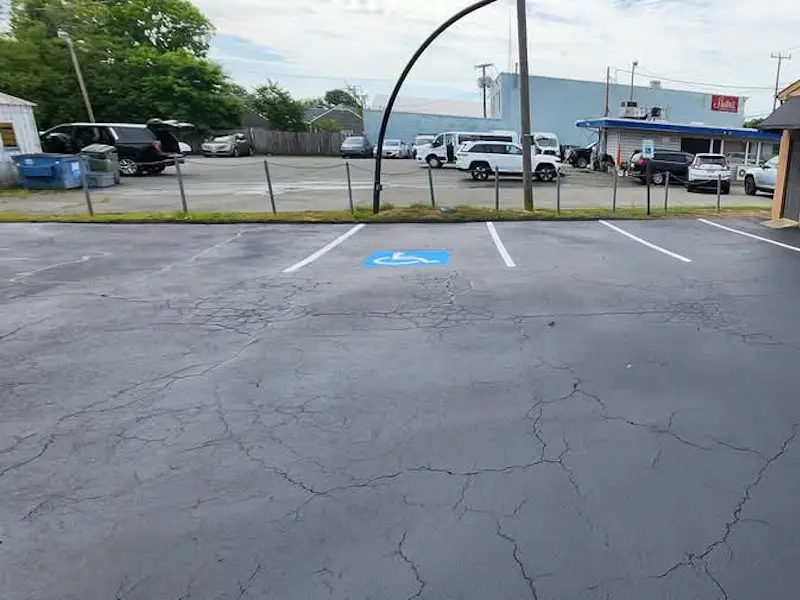
Small cracks are easy to ignore, but water gets into them and does real damage. In Virginia’s climate, that water freezes, expands, and makes the crack worse. Then it thaws, and more water gets in. Repeat that cycle a few dozen times over winter and you’ve got a pothole.
Spring is the right time for crack filling and patching. The temperatures are warm enough for materials to cure properly, and you’re getting ahead of summer heat, which can accelerate deterioration in damaged asphalt.
Clear Debris and Check Drainage
Winter leaves behind sand, gravel, salt residue, and debris that can clog drains and trap moisture against your asphalt. A thorough sweep or pressure wash gets your lot looking cleaner, but it also helps you spot drainage problems.
If water is pooling in certain areas after rain, that’s a problem worth addressing. Standing water softens the base layer under the asphalt and leads to sinking, cracking, and eventual failure. Sometimes the fix is clearing a clogged drain. Other times it requires regrading or repaving a section.
Evaluate Your Striping
Faded parking lines create confusion and liability issues. Drivers don’t know where to park, pedestrians lose clear pathways, and your lot looks neglected. Beyond appearances, worn striping can put you out of ADA compliance if handicap spaces and access aisles aren’t clearly marked.
Spring is a good time for restriping, especially if you’re planning to sealcoat. Fresh striping over a newly sealed surface gives you maximum contrast and visibility.
Consider Sealcoating on a 2-3 Year Cycle
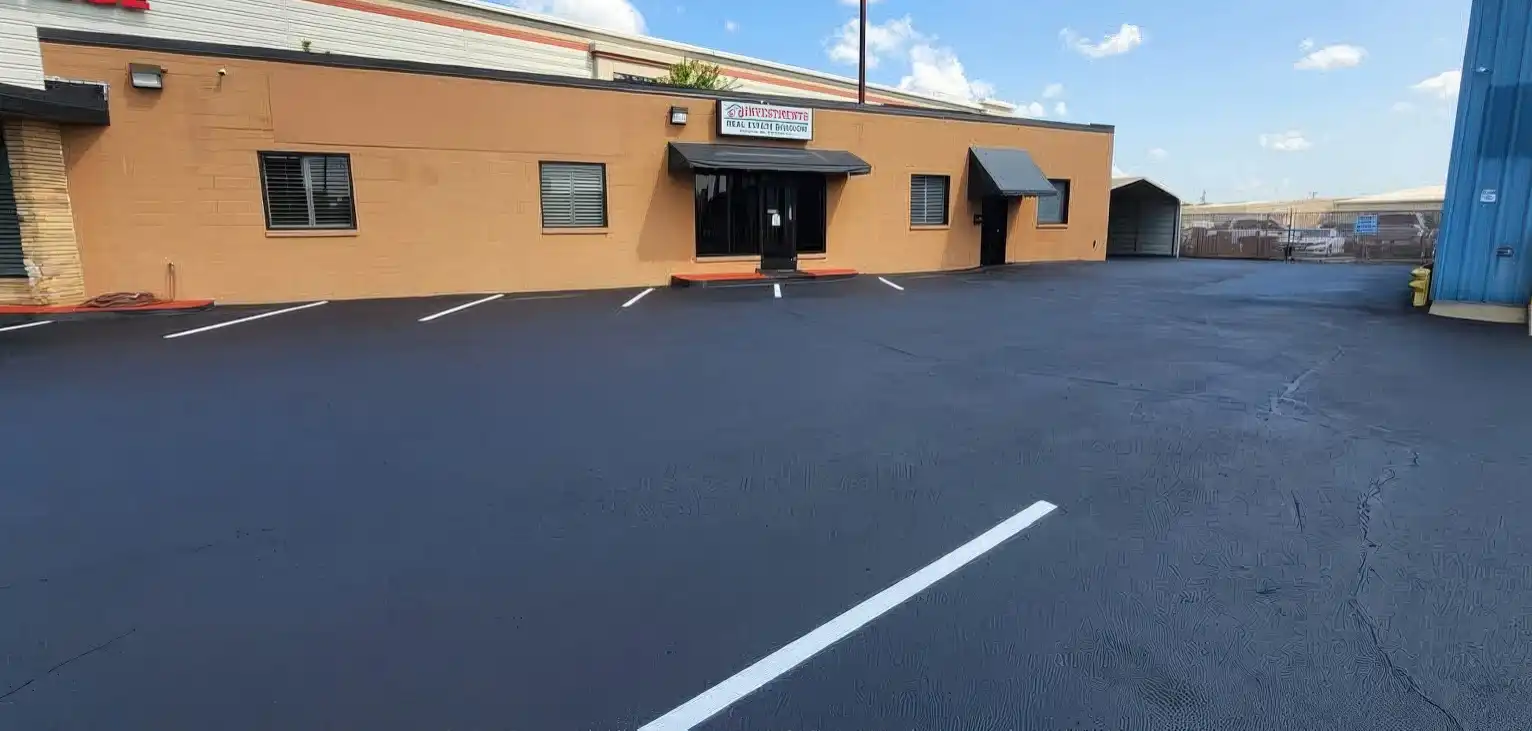
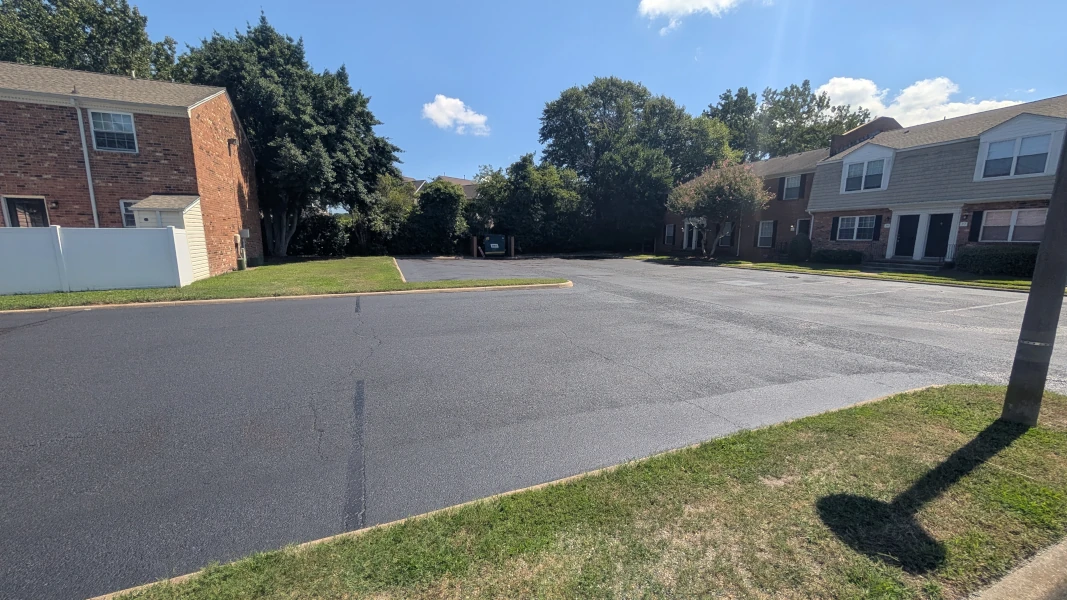
If it’s been a few years since your last sealcoat, spring is the season to schedule it. Sealcoating protects your asphalt from UV rays, oil and fuel spills, and water penetration. It also restores that dark black color that makes your property look well-maintained.
For most commercial lots in the Richmond area, sealcoating every two to three years is the right cadence. High-traffic retail locations might need it more often. Office parks and lower-traffic sites can sometimes stretch it to four years.
The key is not waiting until the surface looks visibly worn. By then, you’re playing catch-up.
Plan for Minimal Disruption
One of the biggest concerns for business owners is downtime. You don’t want your parking lot closed during peak hours or on your busiest days. The good news is that most maintenance work can be phased.
Contractors who work with paving for commercial properties understand this. They can seal or stripe sections of your lot while keeping other areas open for customers. It just takes some coordination upfront.
If you’re managing a retail center, restaurant, or medical office, talk to your contractor about scheduling work during off-peak hours or overnight. A little planning goes a long way.
Create a Maintenance Schedule
The businesses that spend the least on parking lot repairs over time are the ones with a maintenance schedule. They’re not reacting to problems. They’re preventing them.
A basic schedule looks like this: inspect and clean every spring, address repairs as needed, sealcoat every two to three years, and restripe as part of the sealcoating process or whenever lines fade significantly. It’s not complicated, but it requires attention.
Getting Started
Spring maintenance is about protecting your investment and avoiding bigger expenses down the road. The longer you wait on small issues, the more expensive they become. If you’re not sure what your lot needs, a quick assessment from an asphalt contractor can help you prioritize. At RVA Asphalt Sealcoating, we work with businesses throughout Richmond and the surrounding areas to keep parking lots in solid condition. Reach out for a free estimate and we’ll walk your lot with you to figure out what makes sense for your situation.