Commercial Paving in Richmond, VA
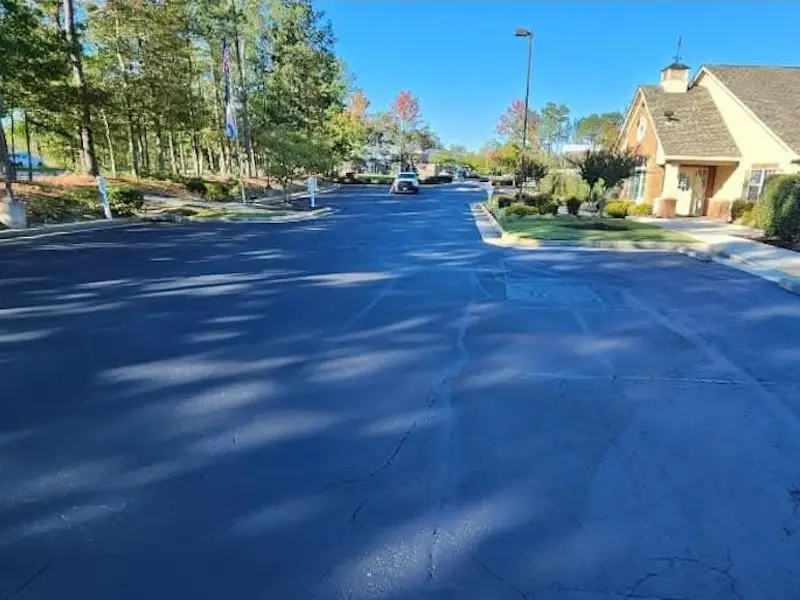
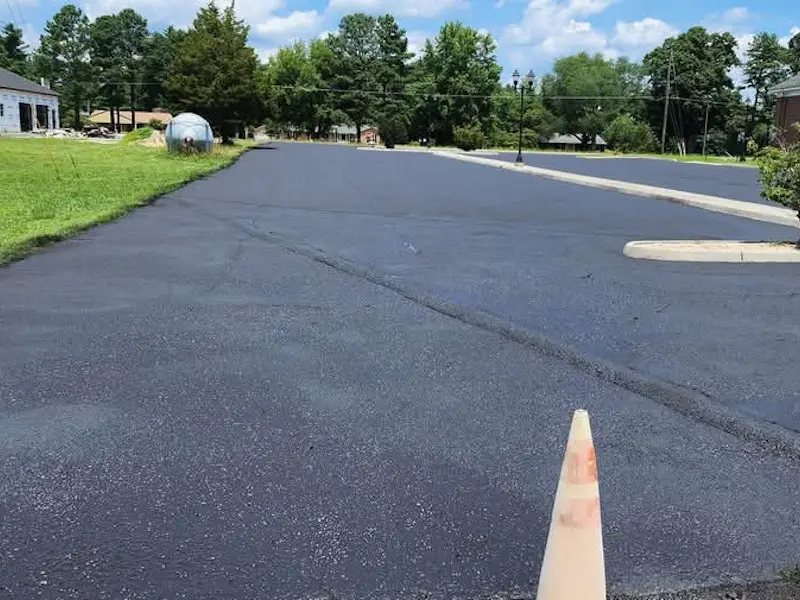
RVA Asphalt Sealcoating designs, mills, overlays, and full-depth replaces commercial asphalt parking lots across the Richmond, VA metro, a family-owned and fully insured paving contractor serving local businesses. We match pavement thickness and base design to how each lot is actually used, so office lots, retail centers, and heavy-truck facilities each get a surface engineered for their load and Richmond’s freeze-thaw winters.
Commercial Paving by Property Type
Every commercial lot carries a different load, and the right asphalt structure follows the use, not a one-size spec.
- Office and retail lots — Typically built around 3 inches of asphalt over a compacted base, sized for steady passenger-vehicle traffic and clean sightlines for customers.
- HOA roads and multifamily lots — Balanced for mixed passenger traffic, guest parking, and long service life with minimal resident disruption during construction.
- Places of worship, schools, and universities — Engineered for heavy peak-day surges and pedestrian safety, with layouts planned around service and drop-off flow.
- Industrial and warehouse facilities — Built thicker, often 5 to 8 inches, to carry loaded trucks, trailers, and repeated axle loads without rutting.
- Municipal and property-management portfolios — Standardized specs and scheduling across multiple sites, coordinated to keep each property operational.
Full-Service Commercial Asphalt Contractor
Most paving problems get expensive because they’re handled by three different vendors who each blame the last one. We keep every stage of your pavement under one accountable roof.
New Asphalt Installation
New lots, expansions, and added parking built from the subgrade up. We construct the base and set thickness to your traffic from day one, so the surface is engineered for the load instead of retrofitted to survive it.
Asphalt Milling & Resurfacing (Overlay)
When the base is sound but the surface is worn, we mill off the old top layer and lay a fresh 2″–3″ driving surface. It’s the faster, lower-cost alternative to full replacement, when the base actually justifies it, and we’ll tell you honestly when it doesn’t.
Full-Depth Parking Lot Replacement
For failed bases, broken drainage, or widespread alligator cracking, we remove everything down to subgrade, correct the foundation, and rebuild. This resets the full service-life window instead of buying a short reprieve.
Asphalt Patching & Pothole Repair
Targeted repairs for potholes, utility cuts, and isolated failures, handled before they spread into base damage and before they become a trip-and-fall liability on your property.
Crack Filling & Crack Sealing
Sealing cracks keeps water out of the base, and water in the base is what kills Richmond pavement over the freeze-thaw winter. It’s the single cheapest thing you can do to add years to a lot.
Sealcoating
A protective coat that shields asphalt from UV oxidation, water intrusion, oil, and fuel, and restores that deep-black, freshly-paved finish. On a regular cycle, sealcoating is the backbone of low-cost lot maintenance and the reason a good lot outlasts a neglected one.
Line Striping & Pavement Markings
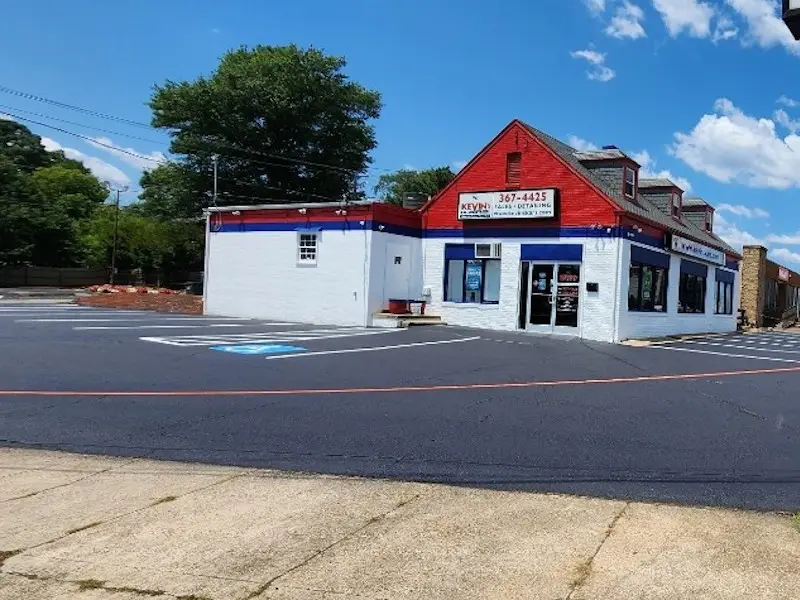
Crisp stalls, fire lanes, directional arrows, crosswalks, and custom stencils. Sharp markings maximize your usable parking count, keep traffic flowing safely, and make the whole property look maintained.
ADA Compliance Striping & Access
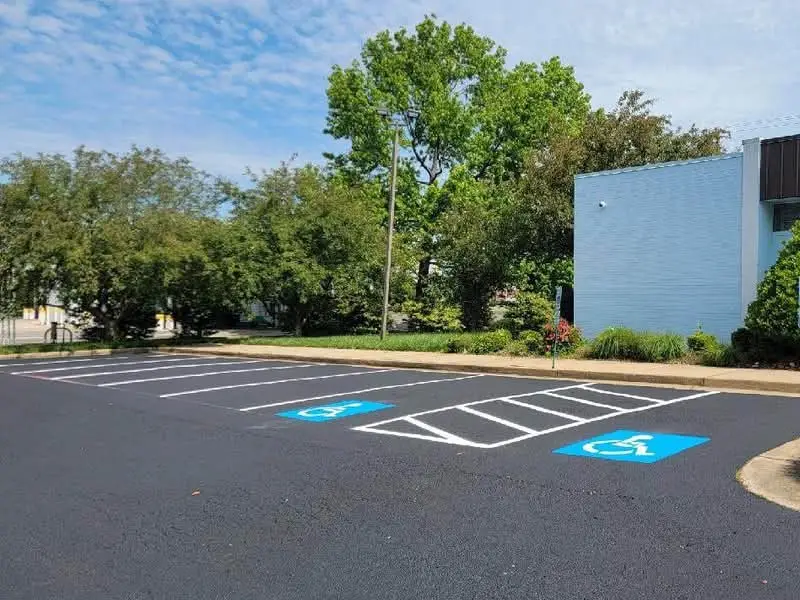
Correctly sized accessible stalls, access aisles, ramps, and signage that keep your property compliant and reduce your liability exposure. Faded or non-compliant ADA markings are a citation and lawsuit risk, we bring them up to standard.
Traffic Control & Accessories
Speed bumps, wheel stops, bollards, and curbing to direct traffic, protect your building, and control how vehicles move through the lot.
Grading & Drainage
Re-sloping and drainage correction so water sheds off the surface instead of destroying the pavement from underneath. With Richmond averaging about 45 inches of rain a year, drainage isn’t optional, it’s what determines how long everything above it lasts.
Signs You Need Commercial Paving
A parking lot tells you when resurfacing or replacement is due. Here are the six symptoms Richmond property owners notice most.
Alligator cracking across driving lanes
Root cause: Interconnected cracking in a scaly, reptile-skin pattern signals base failure, not just a surface problem, water has reached and weakened the sub-base.
Client solution: We core and assess the base; widespread alligator cracking usually calls for full-depth replacement of the affected sections rather than an overlay that would fail again.
Potholes returning in the same spots
Root cause: Recurring potholes mean the underlying base or drainage is compromised, so surface patches keep popping out.
Client solution: We excavate to the subgrade, correct the base and drainage, and rebuild the section so the repair holds.
Standing water 24+ hours after rain
Root cause: Ponding points to grade or drainage problems; with Richmond averaging about 45 inches of rain a year, trapped water accelerates deterioration and freeze-thaw damage.
Client solution: We regrade and re-slope during resurfacing or replacement so water sheds instead of soaking the pavement.
Faded, gray, brittle surface
Root cause: Roughly 2,830 hours of annual sunshine oxidizes unsealed asphalt, stripping the binder until the surface dries out and ravels.
Client solution: If the base is sound, an overlay restores the driving surface; we then recommend a sealcoating schedule to protect the new asphalt.
Rutting and shoving in truck lanes
Root cause: Deformation under wheel paths usually means the asphalt was too thin for the load, common where passenger-spec lots take on delivery traffic.
Client solution: We rebuild the affected lanes at the correct thickness for the actual axle loads the property carries.
Cracks widening after each winter
Root cause: Richmond winters hover around freezing, with about a dozen nights a year at or below 20°F; water in cracks freezes, expands, and pries the pavement apart with each cycle.
Client solution: We evaluate whether milling and overlay or full-depth replacement gives the longer service life, then seal and maintain to slow the next round of cracking.
Overlay vs Full-Depth Replacement
The core commercial paving decision is whether to resurface or rebuild. This table frames it for Richmond conditions.
| Factor | Milling & Asphalt Overlay | Full-Depth Replacement |
|---|---|---|
| Best when | Surface is worn but the base is structurally sound | Base is failing, drainage is broken, or alligator cracking is widespread |
| Scope | Mill 1″–2″, apply tack coat, lay 2″–3″ of new asphalt | Remove all asphalt, correct sub-base and drainage, rebuild |
| Base/drainage issues | Not addressed | Fully corrected |
| Business disruption | Lower — faster turnaround | Higher — longer closure of affected areas |
| Expected life in Richmond climate | Extends service life several years when base is good | Longest service life; resets the full 15–25 year window |
| Risk if wrong method chosen | Overlay over a bad base fails early | Rebuilding a sound lot is unnecessary scope |
Why Richmond Businesses Choose RVA Asphalt Sealcoating
- Family-owned accountability — You work directly with the people responsible for the outcome, not a rotating crew.
- Fully insured projects — Your property and our team are covered, so liability is never your risk.
- Full-service under one roof — Site prep through paving, repair, sealcoating, and striping from one accountable contractor.
- Flexible scheduling — We phase work around your business hours to keep the property operating.
- Load-matched engineering — Thickness and base design set by how your lot is actually used, not a default spec.
- Local climate expertise — Decisions made for Richmond’s freeze-thaw winters, heavy summer rain, and high UV load.
Our Commercial Paving Process
- Site assessment — We evaluate surface condition, base integrity, drainage, and traffic loads, coring where needed to confirm whether to overlay or replace.
- Scope and scheduling — We define the work and phase it around your operating hours to minimize disruption.
- Preparation — We mill existing asphalt or excavate to subgrade, then correct base and drainage issues.
- Paving — We apply a tack coat and lay new asphalt at the thickness matched to your lot’s use, then compact for density.
- Finishing — We coordinate striping and any sealcoating timing, then walk the finished lot with you.
Commercial Paving FAQ
Frequency and Timing
How long do commercial asphalt lots last in Richmond?
With regular sealcoating and timely repairs, a commercial lot generally lasts 15 to 25 years in the Richmond area. High-volume lots trend toward the shorter end; low-traffic lots with good maintenance reach the longer end.
When should a worn lot be resurfaced instead of replaced?
If the base is still sound and the damage is limited to the surface, an overlay is the right call. Once alligator cracking spreads or drainage fails, resurfacing only buys a short reprieve and replacement is the durable choice.
How long before a new lot can be sealcoated?
New asphalt needs roughly six months to cure before its first sealcoat, so the binder can set properly.
How thick should a commercial asphalt lot be?
Around 3 inches suits standard office and retail traffic in Richmond. Warehouses, truck stops, and other heavy-load sites typically need 5 to 8 inches to prevent rutting.
What does asphalt milling and overlay involve?
We mill 1 to 2 inches off the existing surface, apply a tack coat so the new layer bonds, then lay 2 to 3 inches of fresh asphalt over the sound base.
Can you keep our lot open during work?
Usually yes. We phase and section the work around your hours; full closure is faster when feasible, but we plan access when it isn’t.
How does Richmond weather affect a parking lot?
Winters sit near the freezing line, so water in cracks repeatedly freezes and thaws, prying pavement apart, while about 45 inches of annual rain and high summer UV add moisture and oxidation stress. Sealcoating and prompt repairs blunt all three.
Is asphalt or concrete better for a commercial lot here?
Asphalt installs faster with less downtime, is easier and quicker to repair, and its dark surface helps snow melt in Richmond’s short winters. Concrete can suit specific high-load pads, but most commercial lots favor asphalt.