Richmond winters are unpredictable. One week it’s 50 degrees. The next, we’re dealing with a hard freeze followed by rain. That freeze-thaw cycle is rough on asphalt, especially in parking lots that see constant traffic from delivery trucks, tenants, and customers.
By March or April, most commercial lots in Henrico, Chesterfield, and the greater Richmond metro show the effects. Sometimes it’s obvious. Other times, problems hide until they become expensive. Here’s what to look for when you walk your property this spring.
New Cracks and Widening of Existing Ones
Cracks are the most common sign of winter damage. Water seeps in, freezes, expands, and forces the crack wider. This happens repeatedly throughout a Virginia winter. A hairline crack in November can be a quarter-inch gap by March.
Left alone, cracks spread and connect, creating larger structural problems. Linear cracks running across your lot often indicate base failure. Alligator cracking, where the surface looks like reptile skin, means serious structural issues underneath. These usually require asphalt patching or more extensive repair work.
Potholes Forming or Getting Deeper
Potholes don’t appear overnight, but winter accelerates them. They start as small cracks or weak spots. Water gets in and undermines the base layer. Traffic drives over the weakened spot, the surface gives way, and you’ve got a hole.
Beyond being an eyesore, potholes are a liability issue. A customer who trips or damages their vehicle has a legitimate complaint if you knew about the problem and didn’t address it. Spring is the time to get repairs done before the issue spreads further.
Standing Water and Drainage Issues
After a rain, walk your lot and look for areas where water is pooling. Some standing water right after a storm is normal. But if you’ve got puddles that stick around for hours or days, you’ve got a drainage problem.
Richmond’s clay-heavy soils don’t drain well to begin with. Add settled or compacted base material, and water has nowhere to go. It seeps into the surface, softens the base, and leads to premature failure. Standing water is one of the worst things for asphalt. It speeds up every other type of damage.
Sometimes the fix is as simple as cleaning a clogged drain. Other times it requires patching or regrading to redirect water flow.
Faded or Worn Striping
Road salt, snowplows, and constant traffic wear down parking lot striping faster than you might expect. If your lines are faded to the point where drivers have to guess where spaces are, you’ve got a problem.
Beyond the confusion it causes, faded striping can put you out of ADA compliance. Handicap spaces and access aisles need to be clearly visible. If an inspector or injured party can argue that your markings weren’t adequate, that’s a compliance issue. Restriping is a straightforward fix and makes a noticeable difference in how your property looks.
Surface Raveling and Loose Aggregate
If the surface of your lot looks rough or you’re seeing loose gravel and small stones, that’s raveling. The binder that holds the asphalt together is breaking down, and the aggregate is coming loose.
Raveling happens naturally over time, but winter speeds it up. UV exposure, oxidation, and moisture all contribute. A lot that was smooth last year might feel rougher underfoot now. This is often a sign that sealcoating is overdue. Sealcoat protects the surface from further oxidation and restores the protective layer that keeps the aggregate bound together.
Depressions and Uneven Areas
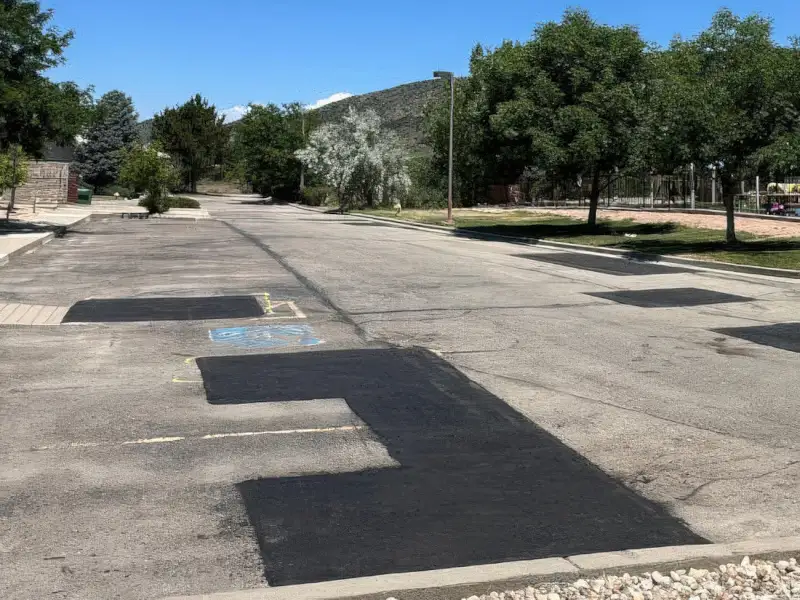
Walk your lot and feel for low spots or areas that seem uneven. These depressions indicate that the base layer has settled or eroded. It happens when water gets underneath the asphalt or when repeated loading compacts the supporting material.
Depressions often appear near drainage areas, along curbs, or in high-traffic sections where repeated loading stresses the base. Depending on severity, the fix might involve patching, an overlay, or more extensive repaving.
Edge Crumbling
The edges of your lot, where the asphalt meets curbs, grass, or gravel, are vulnerable to crumbling. These areas don’t have the same support as the middle of the lot, and winter moisture can get underneath and cause the edges to deteriorate.
Crumbling edges look bad and tend to spread inward if not addressed. They’re also a tripping hazard for pedestrians walking near the perimeter of your lot.
Oil Stains and Chemical Damage
Winter means more idling cars, which means more oil drips. You might also see damage from antifreeze, power steering fluid, or other automotive chemicals. These substances break down asphalt over time.
Heavy staining is more than cosmetic. If left untreated, these spots become soft and start to crumble. In parking areas where the same vehicles park regularly, you’ll often see concentrated damage in certain spaces.
What To Do Next
If you’re seeing any of these signs, it’s worth getting a professional assessment. Some issues are simple fixes. Others need more attention. The key is catching them early before they get worse and cost more to repair. At RVA Asphalt Sealcoating, we work with commercial property owners throughout Richmond, Henrico, Chesterfield, and the surrounding areas. We’ll walk your lot, point out what needs attention now versus what can wait, and give you honest recommendations based on your budget and priorities. Call us and get a free estimate. A little attention now saves a lot of money later.